
Earlier this year, we gathered on Bryant Street in the Mission District to mark a major step forward for our Healthy Resilient Homes initiative. Community members, neighbors, and elected leaders—including Supervisor Jackie Fielder—came together to celebrate the completion of Phase 1 of the demonstration project at our member Amparo’s home. A whole-home electrification retrofit that replaces gas appliances with clean, safe alternatives at no cost to tenants or the building owner.
Amparo Vigil stood at the center of the celebration. A lifelong Mission District resident and PODER member, she opened her family’s four-unit building—purchased by her father in the 1908s—to serve as a demonstration project. For decades, Amparo has rented below market rate to Latinx families, honoring her father’s commitment to keeping the neighborhood strong. Now, her building features induction stoves, heat pump HVAC systems, upgraded electrical panels, and electric heat pump water heaters—creating increased energy efficiency, healthier air, protection from extreme heat, and greater climate resilience for everyone who calls this place home.
Antonio Díaz, PODER’s Organizational Director, opened the press conference by thanking partners and highlighting what this project proves: electrification can center working Latinx families, not displace them. Gas appliances burden households with volatile energy bills and indoor air pollution linked to asthma and respiratory illness. By removing these hazards while protecting working-class tenants and keeping rents stable, we’re showing that climate action and housing justice must go hand in hand—especially in historically redlined neighborhoods like the Mission.
Cyndy Comerford from the San Francisco Environment Department spoke next, affirming the city’s commitment to equitable building decarbonization and the partnership that made this project possible. Then, Supervisor Jackie Fielder took the mic, celebrating the work while calling for the Mission District to be included in SB 1221’s neighborhood-scale decarbonization zones—a resolution she recently championed that passed unanimously at the Board of Supervisors.
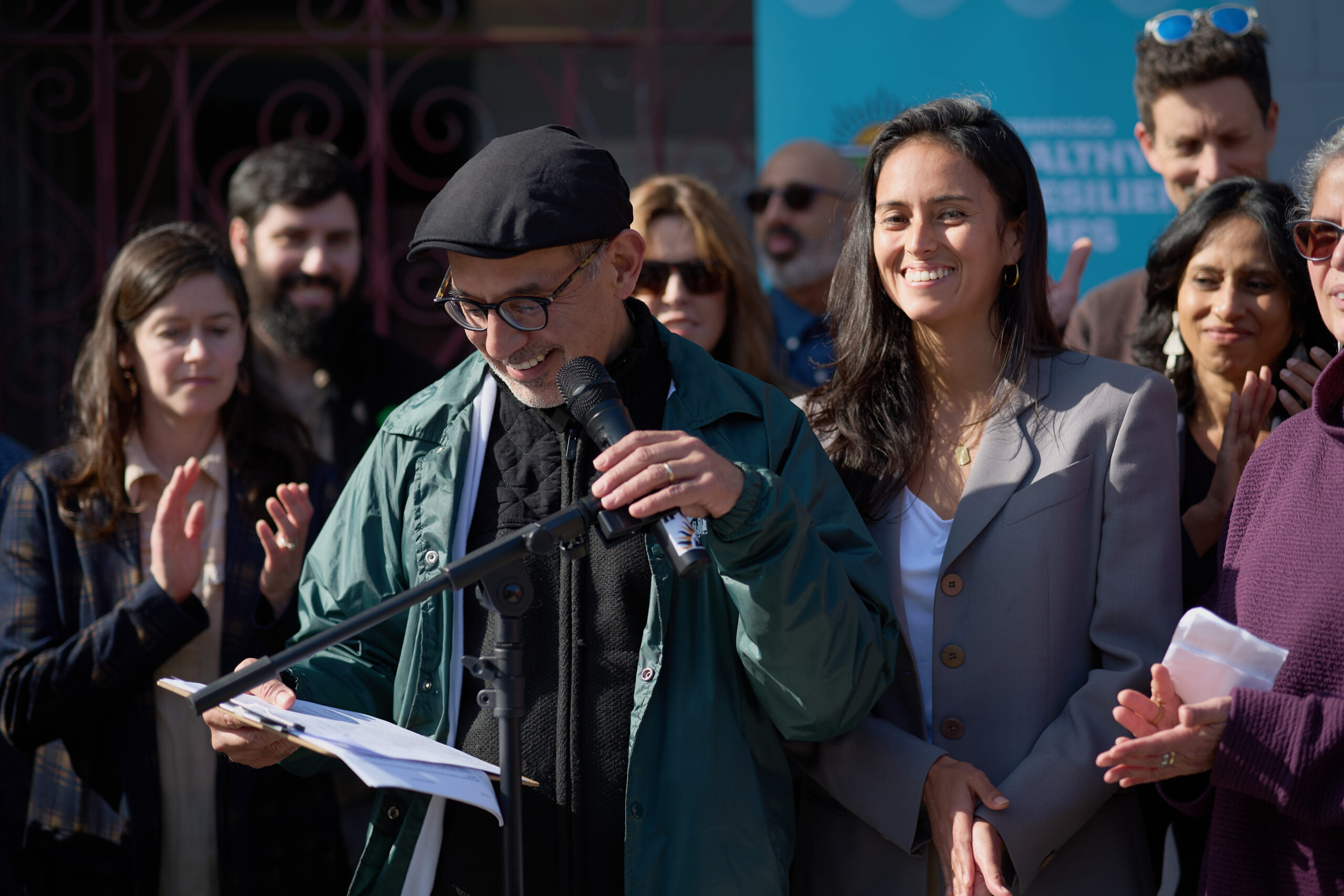
Photo by Demondre Ward
Following the speeches, we led a tour through the building. We started at the front steps, sharing the history of Amparo’s family and their deep roots in the Mission. Inside the garage, we showed the upgraded main service panel. In the hallway, we pointed to the new subpanels and meter upgrades. Out back, we gathered around the electric water heaters and condensers on the porch. Upstairs in Amparo’s apartment, people marveled at the mini-split heat pumps and induction stoves—touching the smooth cooktops, asking questions about utility bills, imagining what this could mean for their own homes. Amparo spoke about what great feeling of relief and joy she experienced the moment she watched the plumber turn off the gas to her home and finally have an all electric building.
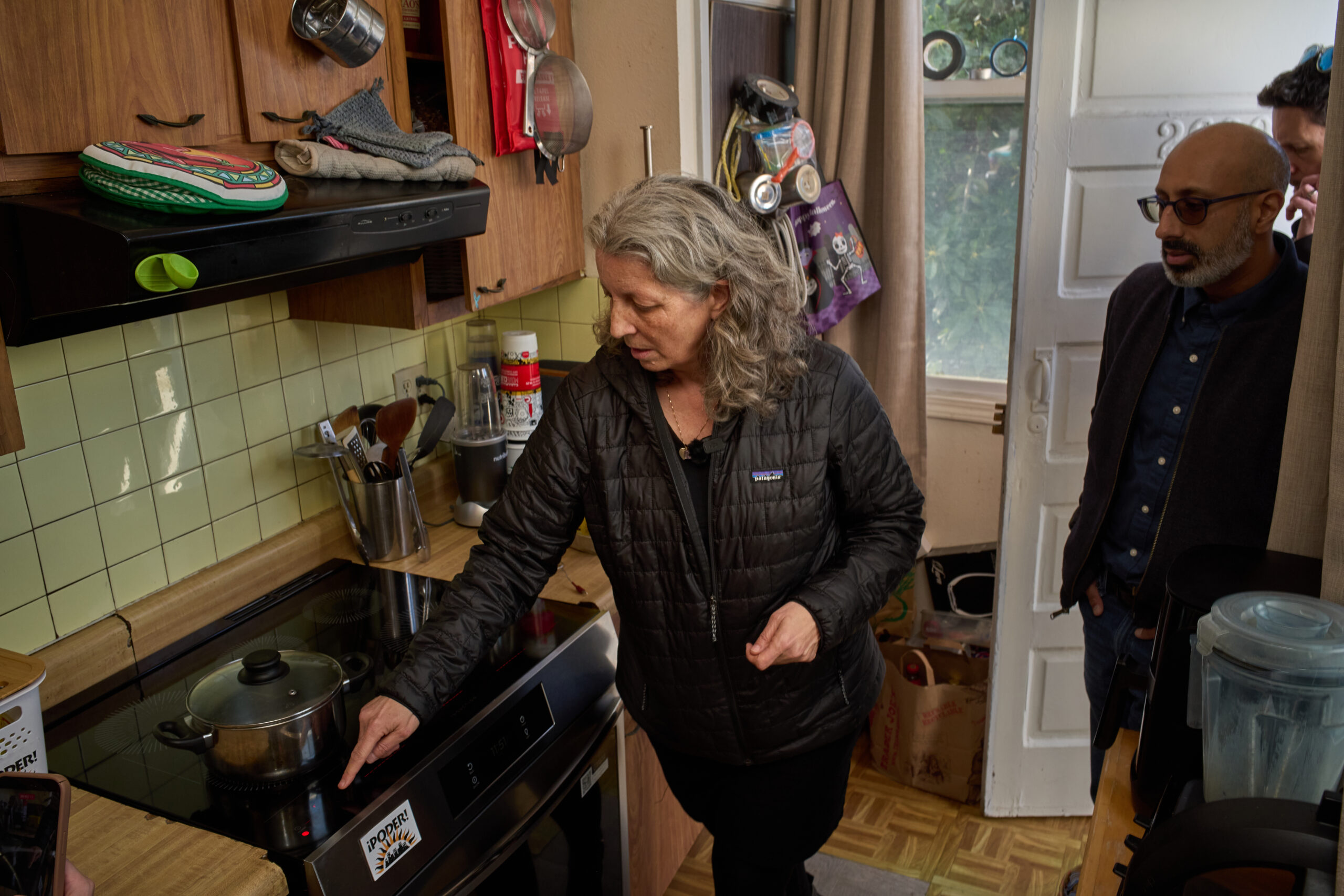
Photo by Demondre Ward
The work isn’t finished. Phase 2—insulation, roof repair, solar panels, and battery storage—awaits additional funding. But what we’ve built here is already a model. Lessons from Bryant Street are shaping state policy through the Equitable Building Decarbonization program and informing advocacy for SB 1221 to designate the Mission District as a priority for a neighborhood-scale decarbonization pilot project. PODER is part of a cohort of community-based organizations and local governments, convened by the Building Power Resource Center, that is advocating for the California Public Utilities Commission to select the Mission District for the pilot program.
Latinx working families want to be part of the solution to climate change—not left as afterthoughts. This project shows us what’s possible when everyday people lead, when trusted organizations with longstanding community relationships steward resources with care, and when public funding flows directly to those most impacted by structural disinvestment and climate chaos.
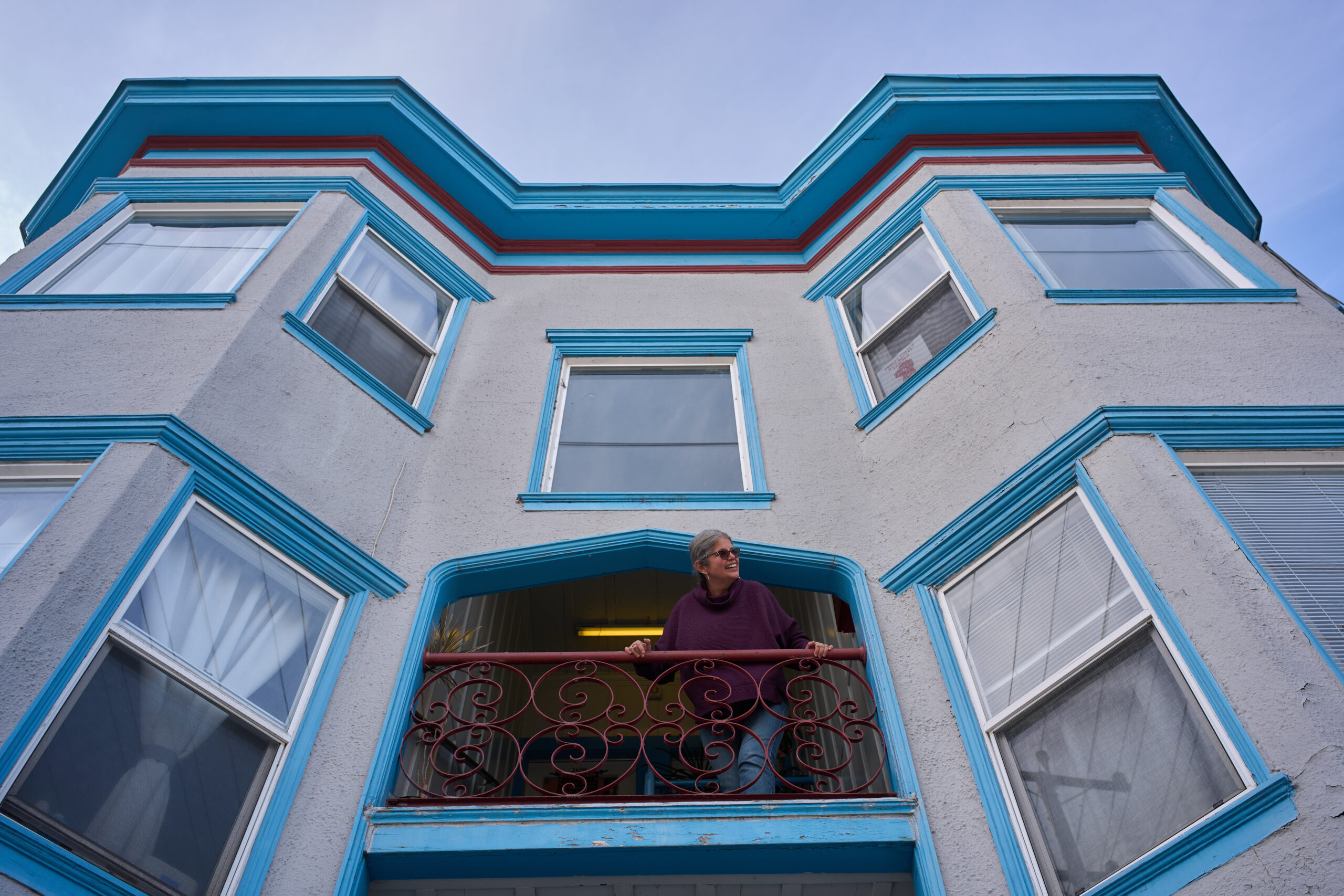
Photo by Demondre Ward